

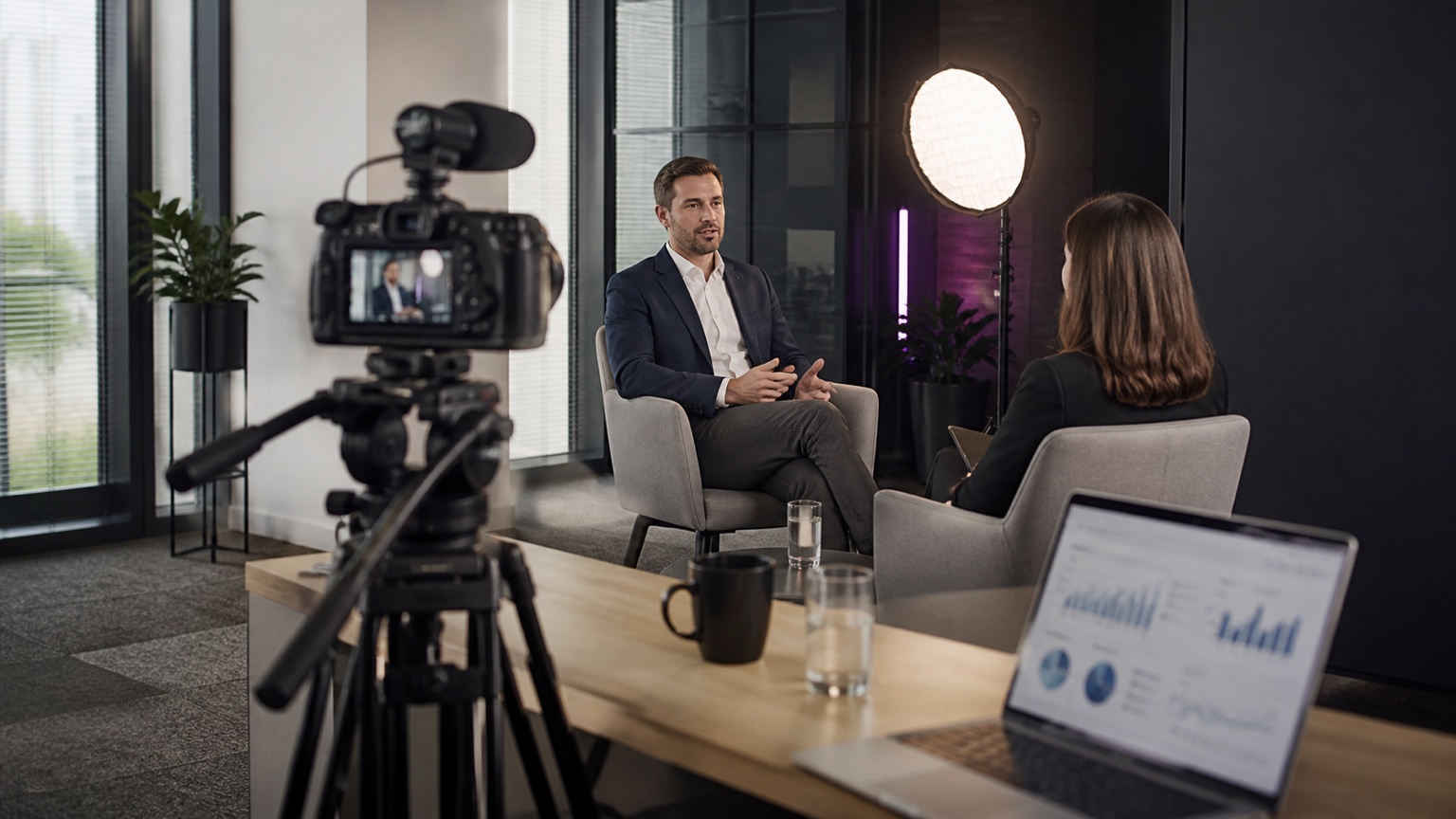
A client testimonial video works when the viewer hears a specific story, not a praise read from a script. First, you need to choose the right interviewee, establish the problem, solution and effect of cooperation, and only then plan the camera, questions, consent and editing. The best testimonial sounds natural but is created with very conscious preparation.
Start a client testimonial video with one story
The most common mistake is trying to tell everything at once. The company wants to show client satisfaction, full offer, process, results, team and several product shots. As a result, the video loses focus. The viewer does not know exactly what to remember, and the review starts to sound like a general advertisement.
Before inviting the client in front of the camera, write one sentence: what change happened thanks to the cooperation? It may be a faster process, better service, greater confidence in decisions, work organisation or a specific implementation effect. This sentence will be the axis of the conversation and editing.
Not every satisfied client is a good film protagonist. Look for a person who can name the situation before cooperation, describe the decision and say what really changed. The mere declaration "I recommend" has little value if it is not clear what it concerns.
Choose the format: short review or mini case study
A client testimonial video can be 30 seconds or several minutes. A short review works well on a landing page, in advertising, on LinkedIn or as part of a larger sales page. A mini case study provides more space for context, process and effect, so it better supports more expensive services, B2B sales and offers requiring trust.
- Short review: one problem, one decision, one effect, quick use in a campaign.
- Mini case study: story before and after, several statements, cutaways from the process or product.
- Reference series: a repeatable format for several industries, customer segments or types of service.
The format must be chosen before recording, as it affects the questions, length of the conversation and list of additional shots. If you plan vertical clips, it is worth leaving space in the frame and recording shorter answers that can be used outside the full film.
Do not give the client a ready-made text to read.
A script helps the production team, but the client should not read a prepared testimonial. Viewers quickly sense unnatural intonation, especially when someone speaks in the brand's language rather than their own. It is better to prepare a set of questions and allow the interviewee to answer in their own words.
A good practice is to send the client the scope of the conversation in advance, but without expecting ready-made sentences. This way, the interviewee feels secure, knows what they will talk about, and at the same time does not come with a learned text. The editor later selects the strongest fragments and arranges them into a logical story.
Questions that help build a credible testimonial.
- What problem or need did you start looking for a solution with?
- What was important to you when choosing the contractor or product?
- What was the cooperation like from the client's perspective?
- Which moment gave you confidence that the decision was right?
- What changed after the project was completed?
- To whom would you recommend such a solution and why?
Ensure consent, comfort and boundaries of the statement.
A video testimonial concerns a real person and often a real company, so formalities are not an afterthought. Before recording, agree where the film will be published, whether it is allowed to use the client's logo, name, position, company name, results and parts of the process. If numerical data appear, ask the client to approve their wording before editing.
It is also worth clearly stating that the interviewee can repeat an answer, take a break or request removal of a fragment before publication. Such comfort usually provides better material than pressure to deliver a perfect sentence on the first try. A natural statement is more valuable than a smooth but artificial phrase.
The recording location should support the story.
The safest place is a quiet room, the client's office or a space related to the film's subject. It does not have to look like a studio. More important are controlled sound, good lighting, tidy background and no confidential information on screens or documents.
If the story concerns a product, service or implementation, also plan B-roll. The statements themselves can be credible, but images of the process help the viewer understand the context. Show the team's work, the product in use, a meeting, the final effect or details that confirm what the client is saying. The list of cutaways should result from the story, not a random walk around the office.
Sound and pace determine trust.
In a testimonial film, the interviewee's face and voice are important. If the sound is distant, echoey or uneven, the viewer loses patience faster. Each person should have a separate microphone, and it is worth recording a short test and listening to it on headphones before the conversation.
The editing pace should not remove the character of the statement. Too aggressive cuts can make the testimonial sound patched together and less credible. It is better to shorten repetitions, pauses and digressions, but leave natural breathing, glances and moments of reflection if they add authenticity.
How to edit a testimonial so it does not sound like an advertisement.
The simplest structure is problem, decision, cooperation and effect. Do not start with a logo or a long introduction about the company. The first sentence should immediately show why this story is important for a similar client. Only then can you add context and the name of the solution.
- Open the film with a specific problem or client statement.
- Remove general praise if it does not lead to any example.
- Interleave the statement with cutaways that confirm the story.
- Do not cover the voice with music that is too loud.
- End with an effect or a clear conclusion, not a random compliment.
It also works well to prepare several exports. The full version can go on the service page or into a case study, and shorter fragments on LinkedIn, Reels, Shorts, sales presentations or follow-up after a sales conversation.
What to prepare before pricing a testimonial film.
- Client's name, industry and consent to participate in the material.
- The main change the film is to show.
- Planned recording location and availability of the interviewee.
- Information whether you need one testimonial, a mini case study or a series.
- List of publication places: website, YouTube, LinkedIn, ads, presentations.
- Brand materials, permitted data, logo and confidentiality restrictions.
Short checklist before recording a client testimonial.
- You know which one story the film is to tell.
- The client knows the scope of the conversation but does not read a prepared text.
- Consents, logo, data and publication places are agreed before the plan.
- Questions lead from problem to effect, not to general praise.
- The place is quiet, tidy and without confidential information in the background.
- You have a list of cutaways that will confirm the client's statement.
- The scope includes the full version and shorter formats if needed.
Do you want to record a client testimonial film that sounds like a genuine story, not an advertisement read from a script? SVISUALS can prepare the questions, shot plan, recording, editing and versions ready for the website, LinkedIn and sales.
Get a quote for a testimonial film →