

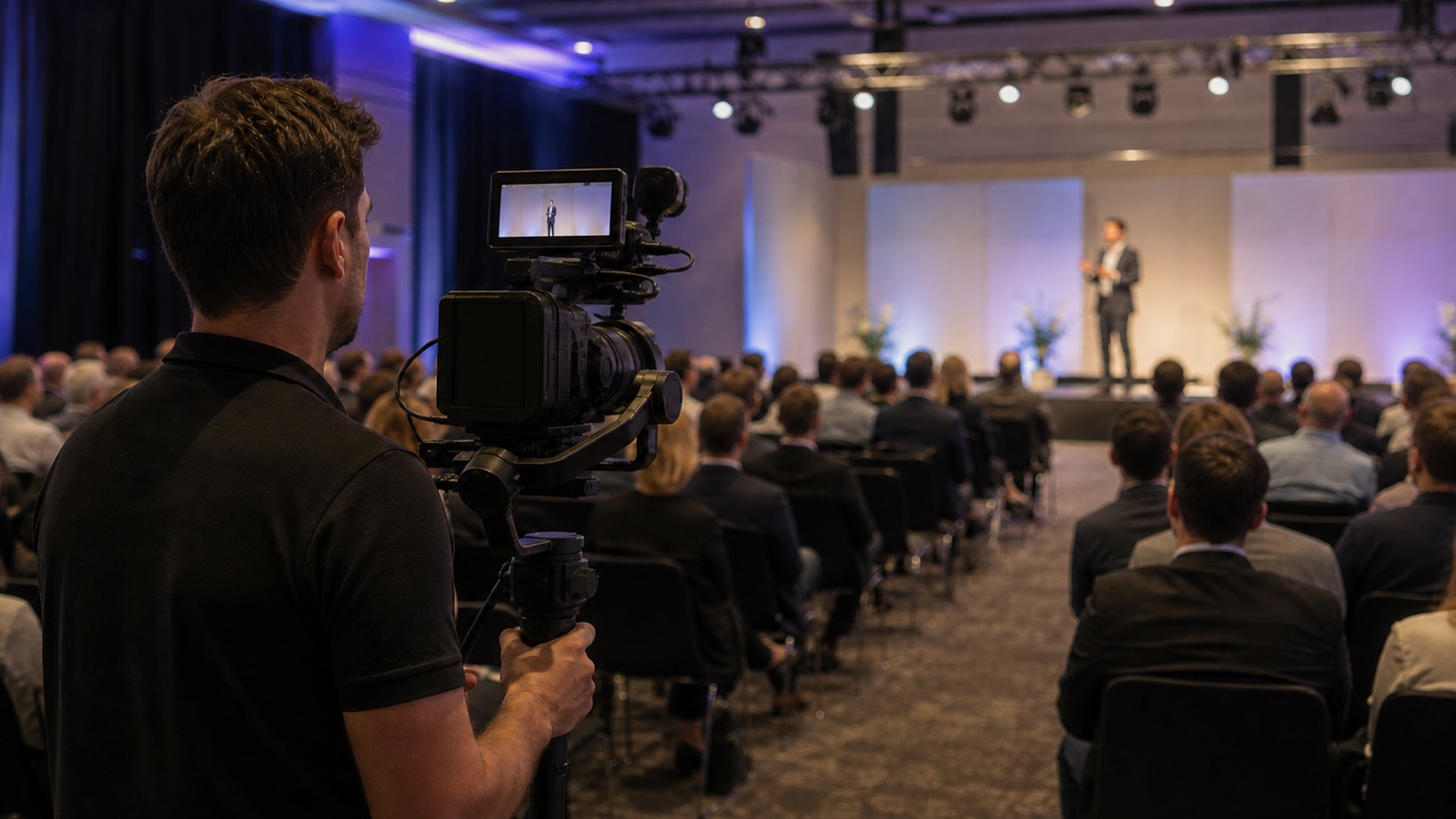
It is worth planning the film from a corporate event before the event schedule is finalised. First, determine why the material is being made, where it will be published and which moments must be included in the finished version. Only then can you select the number of operators, the method of recording sound, time for short statements and the list of files for editing. Such a plan protects against the most common problem: the event ends, and a key speech, participant reactions or organiser’s statement cannot be repeated.
Start the film from a corporate event with one goal
The report should not try to simultaneously document every minute, sell tickets for the next edition, summarise speeches and present all partners. These needs can be met, but usually require several separate materials. The main film should have one priority that guides decisions on set and in editing.
- Promotion of the next edition: emotions, attendance, scale and specific benefits for participants matter.
- Summary for partners: brand exposure, key programme points and organisers’ statements will be important.
- Internal communication: the film can more strongly show people, company culture and the event’s significance for the team.
- Expert materials: the priority becomes a clear record of lectures, panels or short interviews.
If the goal is known in advance, the operator knows whether to more often look for wide shots of the hall, participant reactions, set details or full statements. The editor does not have to later build the story only from what happened to be on the cards.
Set formats before the event, not after editing
The list of final files affects the filming method. Horizontal aftermovies for the website or YouTube need different framing than vertical reels with a short statement. If both formats are to be made from one event, space must be left in the shots for later cropping or selected scenes must also be recorded vertically.
In the brief, write not only the general phrase "film from the event". Specify whether you need a main summary, vertical clips, full lectures, short material for the media, raw statements or a version without music for further use. Not every element has to be included in the scope, but deciding before recording allows proper allocation of the crew’s time.
Turn the event programme into a list of priority shots
The operator should receive the current schedule with marked points that cannot be missed. Useful are the times of speakers’ entrances, product premieres, award ceremonies, management speeches and planned attractions. It is also worth indicating people, partners and set elements that must be visible.
Do not leave unrepeatable moments without a margin
The event programme can shift. Therefore, a production person should have contact with the coordinator who confirms changes on an ongoing basis. The crew must also know whether the stage entrance will be from the left or right side, where the winners will stop and when the product will be brought into the hall. A few minutes of technical conversation before opening the doors can decide whether the key scene is recorded from the right place.
- Opening of the space and first participant entrances.
- Branding, badges, printed materials and location details.
- The most important speeches, demonstrations and audience reactions.
- Conversations behind the scenes, networking and natural interactions.
- Statement from the organiser and an invitation to the next step.
- Conclusion, group photo or programme finale.
One or two camera operators? It depends on what is happening simultaneously.
One operator can efficiently prepare a dynamic report from an intimate event if the programme takes place in one space and there is no need to record full speeches. At a larger conference, one person will not be able to simultaneously maintain a continuous shot of the speaker, capture audience reactions and record conversations outside the hall.
A second operator makes sense when the event uses several stages, important programme points overlap, or the organiser needs a full recording of presentations as well as a dynamic aftermovie. The number of cameras is therefore chosen according to the schedule and scope of materials, not solely the number of guests.
Sound from the event requires a separate plan.
The image from the hall can be recorded from many places, but it is not worth collecting clear speaker sound only with the microphone on the camera. If the film is to include speeches, arrange in advance the possibility of obtaining a signal from the sound engineer's mixing desk. A good practice is also an independent backup recording, as sound levels and configuration may change during the programme.
In the case of a short aftermovie, sound from the hall still matters. Applause, reactions, a fragment of the host's entrance and a few sentences from the stage help build a credible rhythm. Music alone can show the image of the event but will not always convey its content.
Plan statements before participants start leaving.
Short statements from the organiser, partner or participant give the report context. However, it is not worth counting on collecting them by chance at the end. Schedule time slots for interviews, choose the calmest possible place and inform the speakers in advance how much time you need. Two specific answers recorded in good conditions are more useful than a series of chaotic comments from a noisy corridor.
- What was the main goal of this event?
- What specific conclusion can the participant take away?
- What distinguishes this edition or programme?
- Why is it worth attending the next event?
Check the location, consents and technical restrictions.
Before the event, confirm with the venue the places for cameras, access to power, installation hours, the possibility of bringing tripods and rules for working near the stage. If drone shots are planned, the location, conditions and possibility of legal flight must be assessed separately. It is also worth establishing how to inform participants about recording and collecting consents from those who will give statements.
It is good to provide the crew with a floor plan and contact details for the lighting and sound engineer. This way, the operator does not look for the technical entrance when the first presentation starts, and camera placement does not block participants' passage.
What should be included in the brief for an event film.
- The film's purpose and the main target audience.
- Date, place, crew working hours and current schedule.
- List of key people, partners and programme moments.
- Sound scope: aftermovie, statements, full presentations or all these elements.
- Target formats, image orientations and publication locations.
- Deadline for the first version, approving persons and number of feedback rounds.
- Brand materials: logos, end screens, speaker names and correct job title spelling.
The shortest checklist before starting the event.
- The crew knows the main purpose of the film and the list of required files.
- The schedule indicates moments that cannot be repeated.
- The coordinator informs operators about programme changes.
- The audio signal and backup recording are arranged with the engineer.
- Speakers have designated short time slots for statements.
- The location has confirmed camera places, technical access and recording rules.
- The publication deadline allows time for editing, feedback and exports.
Are you organising a conference, product launch or corporate meeting? SVISUALS can plan the shot list, camera operation, sound recording and editing of finished versions for the website and social media.
Get a quote for an event film. →